Running an SME in Nigeria today means moving faster, communicating better, and making data-driven decisions, often with small teams and tight budgets. SaaS (software as a service) tools let you access world-class software without heavy capital spend. They give Nigerian teams instant access to email and calendars, team chat, payments, customer communication, marketing automation, design assets, and integrations, all on a subscription basis, so you can scale as you grow.
When you pick the right SaaS stack, you reduce friction across operations: fewer missed orders, faster replies, cleaner accounting, and marketing that actually converts
The Top 7 SaaS Tools And Why Each Made The List
Below are my recommended must-have tools for Nigerian SMEs. I explain what each does and why it matters for sales and productivity.
1) Siteti: WhatsApp CRM (your CRM pick)
What it is: WhatsApp-first CRM that gives multi-user access to one WhatsApp Business account, broadcasts, quick replies, lead tagging, and automation.
Why SMEs need Siteti: In Nigeria, most of the first customer contact starts on WhatsApp. Siteti is the CRM built around that behaviour — it centralizes chats, automates follow-ups, schedules broadcasts, and lets teams collaborate on one number without sharing devices. Make Siteti your only CRM in this stack and let other tools integrate around it.
2) Slack: Team communication & lightweight knowledge sharing
What it is: Instant messaging for teams with channels, threads, and app integrations.
Why SMEs need Slack: Slack replaces chaotic group WhatsApp chats for internal coordination. Create channels for Sales, Support, and Ops, and use threaded replies, searchable history, and integrations (Drive, Google Calendar, Zapier) to keep work discoverable and reduce repeated questions.
3) Google Workspace: Email, documents, and collaboration
What it is: Business email (Gmail), Drive for storage, Docs/Sheets for files, Google Meet for video calls and conference meetings, and Calendar for scheduling.
Why SMEs need Google Workspace: It’s the backbone of modern work: share files, collaborate in real time, and run professional email on your domain. Tight integration with calendars and Meet reduces back-and-forth and speeds decision-making.
4) Paystack: Payments & invoicing (Nigeria-friendly)
What it is: Simple payment processing for businesses in Nigeria and across Africa.
Why SMEs need Paystack: Local payments, quick integration, card and bank transfers, recurring billing, and strong developer docs make Paystack ideal for Nigerian merchants. Good payments = fewer abandoned carts and faster cash flow.
5) Mailchimp: Email marketing & automation
What it is: Email and SMS marketing platform with templates, automation, and audience segmentation.
Why SMEs need Mailchimp: Use Mailchimp to convert leads into customers and keep buyers coming back with automated flows (welcome series, cart recovery, promos), important when you need repeat sales from limited acquisition budgets.
6) Canva: Design made simple (social posts, promos, flyers)
What it is: Drag-and-drop design tool with templates for social posts, presentations, menus, posters, and short videos.
Why SMEs need Canva: Small teams can produce on-brand social creatives, product images and marketing materials without a designer, huge time & cost saver. Canva also adds useful collaboration for marketing teams.
7) Zapier: Automations & integrations (glue between apps)
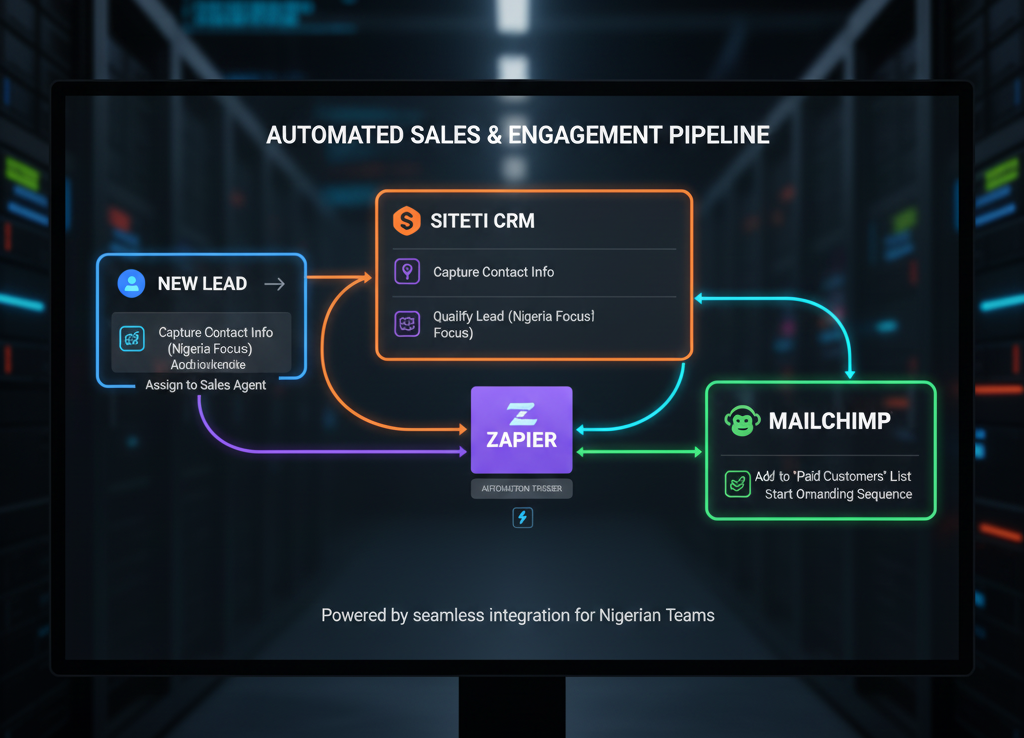
What it is: Connects apps and automates workflows (e.g., new payment in Paystack → create customer record in Siteti or add to Mailchimp).
Why SMEs need Zapier: Zapier turns disconnected tools into a cohesive workflow. Save hours by automating repetitive tasks: create leads automatically, update spreadsheets, send Slack alerts for new orders, and more.
How these tools benefit sales & productivity
In today’s fast-paced digital landscape, small and medium enterprises (SMEs) need to operate with maximum efficiency to thrive. The key to unlocking this growth lies in a strategically chosen technology stack that streamlines your core operations.
This powerful combination of seven essential tools addresses the lifeblood of any SME: reach (marketing), revenue (payments), relationships (CRM), and productivity (collaboration & automation).
Here is a breakdown of how these tools deliver tangible benefits to your sales pipeline and overall team productivity:
Boosting Sales and Customer Relationships
Faster Response Times: The integration of Siteti, Mailchimp automations, and Zapier triggers ensures that the moment a customer sends an inquiry, a meaningful reply reaches them quickly. This dramatically reduces customer lag, which in turn improves satisfaction and keeps potential leads warm, ultimately boosting sales opportunities.
Better Cash Flow: Paystack’s simple checkout process and reliable recurring billing features ensure you get paid promptly. Minimizing friction at the payment stage accelerates revenue collection and significantly improves the business’s cash flow health.
More Marketing Conversions: Creating consistent, professionally branded campaigns is effortless with Canva. Exporting these polished designs to Mailchimp ensures your messaging and visuals resonate powerfully with your audience, leading to higher click-through rates and better conversion results from your marketing efforts.
Team Productivity and Efficiency
Tighter Teamwork: Leveraging Google Workspace alongside Slack moves internal conversations away from messy email chains, effectively reducing “email noise.” This collaboration hub keeps work documented transparently, making information easy to find, keeping projects organized, and improving cross-team communication for better collective productivity.
Less Manual Work: The automation power of Zapier removes tedious, repetitive copy and paste chores between applications. By eliminating this draining administrative work, your team is freed up to focus entirely on high-value tasks: selling, serving customers, and strategic growth.
Centralized Relationships (CRM Hub): Siteti centralizes all customer interactions, which is especially critical in markets where platforms like WhatsApp drive a significant volume of customer contact. Keeping lead status and conversation history in one place ensures no lead falls through the cracks, leading to better relationship management.
How to Implement This High-Impact Stack
A successful technology adoption strategy focuses on phased implementation and clear measurement. Follow these practical steps to seamlessly integrate this powerful stack into your business operations:
1. Establish Siteti as Your Central CRM Hub
Since customer contact, particularly in many regions, is heavily driven by messaging apps like WhatsApp, Siteti should be the single source of truth for all customer conversations and lead statuses. From Siteti, you can push clean, structured customer records to Google Sheets (for data analysis) or Mailchimp (for marketing campaigns) as needed. Here is a list of other CRM tools you might find helpful.
2. Design Once, Reuse Everywhere
Maximize your marketing efficiency by leveraging Canva templates. Create a set of branded design assets (banners, social posts, email headers) and then export and deploy them across Mailchimp campaigns and all your social media channels. This ensures a consistent, professional brand presence that builds trust and saves time.
3. Measure, Monitor, and Iterate for Growth
The benefit of digital tools is their data. Continuously track key performance indicators (KPIs) to identify bottlenecks and successes:
- Marketing: Monitor Click Through Rates (CTR) on your Mailchimp emails.
- Support: Track response time metrics within Siteti.
- Revenue: Analyze payment completion rates on Paystack.
Configure Slack to send internal alerts when these critical KPIs dip below target thresholds, allowing your team to react instantly and make adjustments.
4. Plan Your Budget for Subscription Growth
SaaS tools save immense amounts of time and labor, but they require a monthly investment. Be strategic: select subscription plans that align with your current operational volume and budget. As your business scales and the tools deliver a clear Return on Investment (ROI), you can confidently upgrade your plans to support your growing volume.
The right SaaS stack turns busywork into predictable processes. For Nigerian SMEs, this specific mix balances global reliability (Google Workspace, Slack), local payment convenience (Paystack), WhatsApp-first customer management (Siteti), marketing & design (Mailchimp + Canva), and automation glue (Zapier).