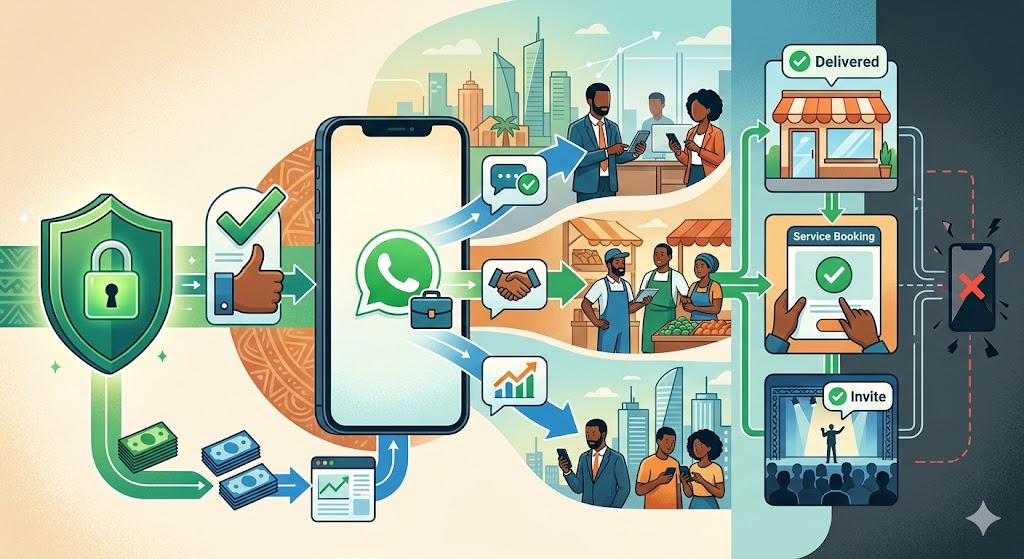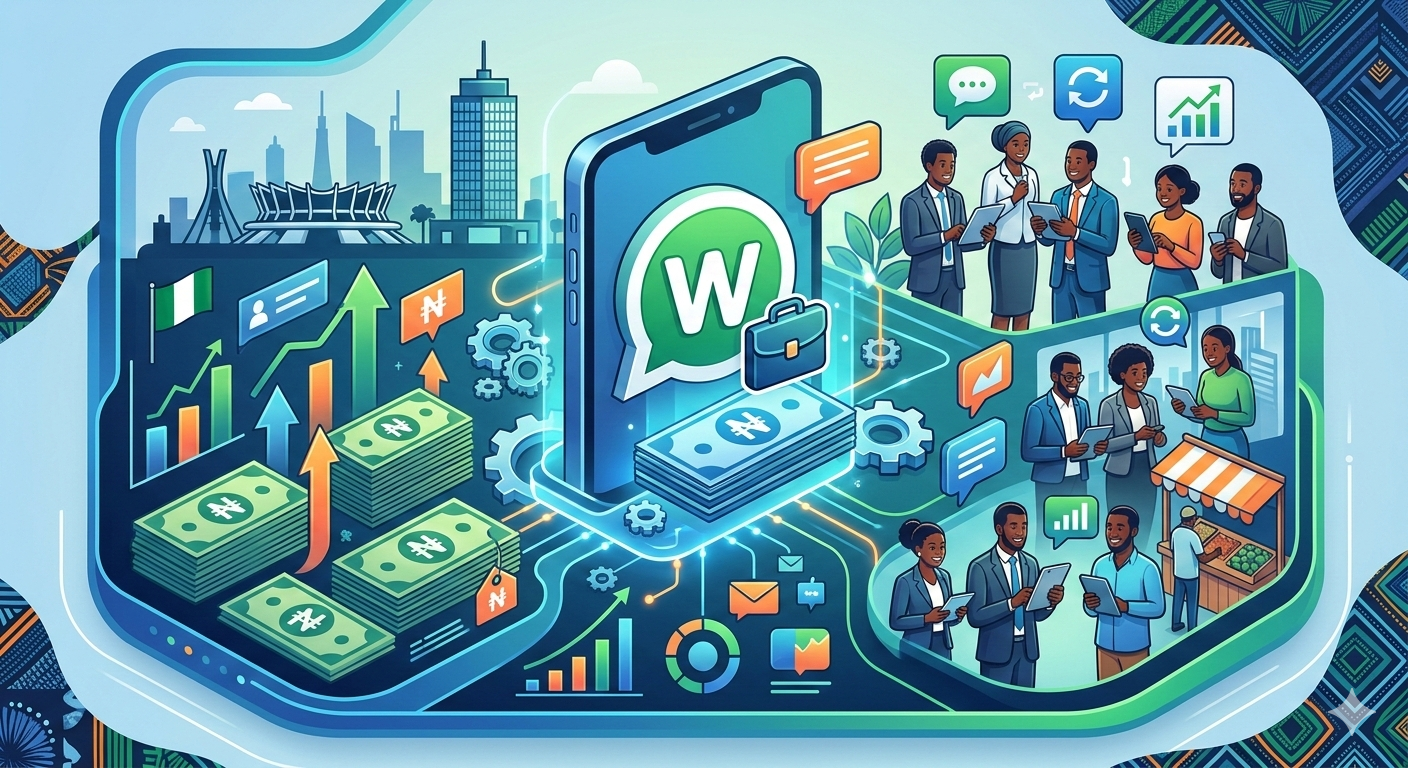
Africa’s business landscape is undergoing a structural shift. Customer interaction is becoming faster, more digital, and more personalized, driven heavily by the adoption of mobile-first channels like WhatsApp. As Nigerian real estate and logistics teams scale operations, the pressure to deliver consistent, trackable, and high-touch customer experiences has never been greater.
From 2026 to 2030, CRM in Africa will transition from simple contact management to intelligent automation, real-time messaging, and AI-driven decision support. The frontline teams that embrace this transformation will build stronger pipelines, close deals faster, and achieve operational reliability at scale. Earlier analyses from Scaling Customer Support for African SMEs: WhatsApp Business API in Action already highlighted how WhatsApp automation reduces operational bottlenecks, this next era takes that evolution even further.
Current CRM Landscape
Right now, CRM adoption across Nigeria is still uneven. Most teams use a mix of spreadsheets, WhatsApp chats, shared phones, and basic tools. Real estate and logistics teams rely heavily on WhatsApp because customers want instant responses, voice notes, media sharing, and on-the-go communication.
But this fragmented workflow creates operational risks:
- No centralized lead management
- Missing follow-ups
- Zero visibility into customer history
- Lost deals due to inconsistent contact
The gap between customer expectations and team capability is widening. Teams need a CRM that works where their customers already are, inside WhatsApp. That’s why WhatsApp-native CRMs like Siteti, Wati, and Respond.io are accelerating adoption. They solve for what African teams need most: speed, mobility, and real-time coordination. This foundation sets the stage for the next five years.
Emerging Trends 2026-2030
From 2026 onward, CRM in Africa will shift gears into a more advanced, more automated, and more integrated era.
1. WhatsApp-Native CRMs Become the Standard
The future is WhatsApp CRM, no debate. WhatsApp already owns the customer communication space. What changes next is automation, multi-agent access, AI messaging, and deep integrations.
CRMs not built around WhatsApp will struggle for relevance.
2. AI-Powered Follow-Ups and Predictive Engagement
AI engines will:
- score leads automatically,
- predict buyer readiness,
- recommend next best actions,
- generate quick replies instantly,
- and run personalized nurture sequences.
Real estate teams will know who is most likely to buy. Logistics teams will know which clients need proactive status updates.
3. Hyper-Localized CRM Design
Africa’s CRM evolution won’t follow Western models. New solutions will be localized for:
- poor network environments
- mobile-only teams
- WhatsApp-first workflows
- multi-agent collaboration
- segmented lead journeys
CRMs will finally align with how Africans actually sell.
4. Full Integration Across the SME Stack
CRMs will integrate seamlessly with:
- payment gateways
- property listing portals
- logistics tracking systems
- invoicing tools
- onboarding workflows
- call-centers and IVR
Data will move frictionlessly between tools.
5. Real-Time Automation for Operations
By 2030, automation will handle:
- inspection reminders
- delivery status notifications
- contract follow-ups
- abandoned enquiries
- weekly broadcasts
- customer satisfaction surveys.
This will free frontline teams to focus on relationship-building and high-value work.
6. CRM as a Revenue Command Center
CRMs will not just manage data, they’ll drive sales. Dashboards will show:
- pipeline predictions
- churn alerts
- revenue forecasts
- team performance analytics
Decision-making becomes fast, data-driven, and clear.
Opportunities for Nigerian SMEs
For Nigerian SMEs, the coming CRM wave offers strategic upside across operations, revenue, and customer experience.
1. Faster Conversions
With automation, leads get immediate responses, structured follow-ups, and consistent communication, leading to shorter sales cycles.
2. Team Productivity Gains
WhatsApp CRM eliminates manual tracking. Teams reclaim 10–20 hours weekly previously spent chasing customers.
3. Stronger Customer Trust
Real-time updates, automated reminders, and clean communication build reliability, critical for real estate and logistics clients.
4. Scalable Operations Without Hiring
Automation + workflows allow teams to handle 3–5× more customers at the same staffing level.
5. Competitive Differentiation
SMEs using CRM automation will outpace competitors still using spreadsheets and one-man WhatsApp setups.
Some Companies That Are Already Implementing this
1) Yefepere
Yefepere, a fast-growing on-demand cake and gifting brand, relied heavily on WhatsApp for orders. As volumes grew, the team struggled with missed messages, late confirmations, and inconsistent delivery updates. Public reporting shows they adopted WhatsApp Business API automation (through tools like Siteti) to streamline order intake, confirmations, and dispatch updates. The result: fewer missed orders, faster fulfilment, and smoother delivery coordination across multiple baker partners. This operational discipline is now core to Yefepere’s rapid scale.
2) Triconna Real Estate
Triconna, a Port Harcourt–based developer, experienced high inquiry volumes during property launches but struggled with manual follow-ups and inspection scheduling. Coverage of its recent sell-out projects (e.g., Pearl Haven) shows a shift to structured, fast-response communication, largely driven through WhatsApp as the first-touch channel. By centralizing inquiries and standardizing follow-ups, Triconna accelerated inspection bookings and reduced delays in converting prospects to paying buyers. Speed and consistency became their competitive advantage.
3) Swisszaco Real Estate
Swisszaco routes nearly all enquiries through WhatsApp, using it as the core channel for inspection booking, directions, and sales conversations. Their estate pages explicitly drive prospects to WhatsApp for immediate engagement. While no vendor-specific CRM is publicly documented, their conversational workflow (inquiry → automated response → human follow-up → inspection) is exactly the pattern that CRM automation strengthens. This approach reduces no-shows and shortens the sales cycle for distributed project sites.
What Real Estate and Logistics Teams Should Execute in Q4 2025 – Q1 2026
If you’re looking to tighten your sales engine and move into 2026 with a more automated, WhatsApp-driven workflow, here’s the execution roadmap high-performing teams are already adopting.
1. Run a Process Audit This Week
Start by reviewing how leads actually move through your system today. Map the entry points, response paths, and where follow-ups typically break. Identify 3–5 repetitive actions, things like acknowledgements, reminders, and document sending, that should be automated immediately.
2. Launch a 30-Day WhatsApp CRM Pilot
Test a WhatsApp-first CRM to handle multi-agent replies, templated notifications, faster routing, and basic automation. Tools like Siteti, Interakt, Respond.io, or a Meta BSP partner will get you moving, but Siteti offers the most frictionless onboarding for WhatsApp-heavy teams. Treat this as a sprint: measure response time, handling speed, and pipeline movement.
3. Deploy Three High-Impact Automations
Roll out the basics that drive quick wins:
• Automated acknowledgement with key info for every new enquiry
• Inspection or delivery reminders to reduce no-shows
• Payment or receipt templates to formalize financial touchpoints
Track improvements in response time, lead-to-show rate, and conversions.
4. Scale With AI and Integrations (6–12 Months)
After stabilizing the core experience, layer in intelligence. Add intent detection, auto-assignment, CRM integrations, and LLM-powered assistants to triage incoming messages instantly. Industry forecasts from Mordor Intelligence show AI-assisted CRMs becoming the dominant standard for frontline engagement, this is the moment to phase it in.
5. Strengthen Governance & Hosting
If you handle sensitive client data (high-value buyers, logistics coordinates, KYC details), evaluate private-cloud or regionally hosted CRM options. Platforms like Siteti already support this for teams that need stronger control, compliance, and isolation.
The next five years (2026–2030) will see CRM move from generic platforms to conversational, AI-augmented, and verticalized systems, with WhatsApp at the center for African teams. Nigerian real estate and logistics teams that standardize workflows, pilot WhatsApp-first CRMs, and instrument their pipelines will win speed, scale, and measurable revenue gains.