In Nigeria’s fast-moving business environment, speed isn’t a luxury, it’s the competitive advantage. Customers expect rapid follow-ups, clean communication, and a consistent experience across every touchpoint. For most SMEs, WhatsApp is the operational heartbeat of sales. But when teams manage follow-ups manually, the drag on productivity is unavoidable.
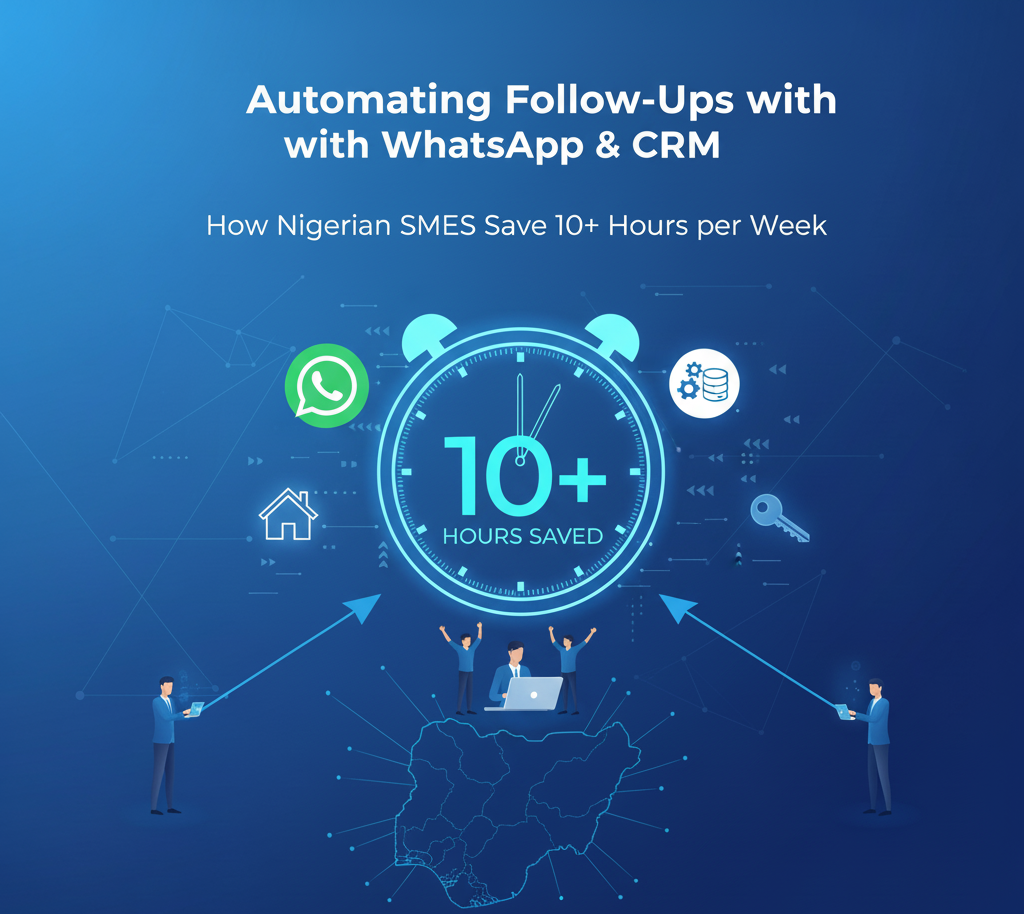
Forward-thinking SMEs are now leaning into WhatsApp + CRM automation to compress the time it takes to re-engage leads, nurture prospects, and close deals, saving 10+ hours every week while lifting customer experience. This approach builds directly on the digital transformation happening across Africa, explored earlier in Scaling Customer Support for African SMEs: WhatsApp Business API in Action, where WhatsApp automation emerged as a core driver of operational efficiency.
Today we will show you why follow-ups matter, the returns of automation, the tools that power it, and real examples from Nigerian SMEs already seeing measurable gains.
Why Follow-Ups Are Critical
Follow-ups are the growth engine behind every Nigerian SME operating in a WhatsApp-driven market. Whether you’re selling fashion, real estate, professional services, logistics, or FMCG, customer momentum is fragile. Without structured follow-ups, SMEs consistently face:
- Leads going cold due to delayed responses
- Stalled deals because customers aren’t nudged toward next steps
- Missed opportunities from forgotten messages
- Duplicated work because teams can’t track conversations
- Loss of pipeline visibility
With over 90% of transactional conversations happening on WhatsApp, missing even one follow-up is costly. Nigerian buyers move quickly, and so do your competitors. This is why SMEs that excel at timely follow-ups consistently report higher conversion rates and repeat business.
Automation Benefits
Automation turns follow-ups from a time-consuming obligation into a predictable, scalable workflow that moves customers down the funnel without manual pressure on your team.
Save 10+ Hours Every Week
Routine tasks such as:
- sending reminders,
- confirming orders,
- nudging prospects,
- sharing product or service details,
- re-engaging cold leads
…are executed automatically.
This clears space for high-impact work: closing deals, customer retention, and growth.
Consistent Customer Experience
Every lead receives structured, timely follow-ups, regardless of workload, staff shortages, or peak sales periods.
Higher Conversion Velocity
Automation accelerates deal flow. Prospects are guided at the right time with the right message, reducing drop-offs.
Better Team Accountability
With automation connected to a CRM, managers get clarity on:
- who is responsible for each customer,
- which follow-ups have been sent,
- and where each prospect sits in the pipeline.
Scalable Growth Infrastructure
This isn’t just about follow-ups. It’s part of a broader modernization wave where SMEs use automation to scale support, marketing, and sales, echoing themes from Scaling Customer Support for African SMEs: WhatsApp Business API in Action, where WhatsApp-based automation helped businesses serve customers at scale without extra headcount.
Tools and Setup Guide
Automation sits on top of three core components: a WhatsApp-ready CRM, structured workflows, and consistent messaging. Nigerian SMEs are increasingly adopting solutions that combine these capabilities into one system.
Step 1: Choose a CRM Optimized for WhatsApp
Your CRM should offer:
- Multiple-agent WhatsApp access
- Automated reminders
- Lead segmentation (cold/warm/hot)
- Quick replies
- Broadcast messaging
- Pipeline tracking
- Message timestamps and activity logs
Leading options include:
- Siteti
- Wati
- Respond.io
- Interakt
- Zoko
SMEs that operate fully through WhatsApp tend to prefer Siteti because onboarding is fast (under two minutes) and agents work from their own devices without sharing logins.
Step 2: Build Follow-Up Sequences
Create automated workflows such as:
- Immediate response after enquiry
- Day 2–3 nurturing message
- Day 7 re-engagement
- Abandoned cart or abandoned enquiry follow-up
These run without manual involvement.
Step 3: Set Up Quick Replies
Standardize communication for:
- Pricing
- FAQs
- Product descriptions
- Service breakdowns
- Payment instructions
- Booking confirmations
This reduces response time dramatically.
Step 4: Segment Every Lead
Use tags like:
- Hot
- Warm
- Cold
- Returning customer
- High-value buyer
Segmentation improves automation accuracy and prioritization.
Step 5: Schedule Weekly Broadcasts
Broadcasts maintain top-of-mind presence by sharing:
- New arrivals
- Limited-time promos
- Insightful tips
- Product updates
- Service reminders
This drives more reactivation and repeat business.
Case 1: Yefepere (Cake Delivery Company)
Yefepere manages a steady stream of WhatsApp orders and enquiries. Before automation, the team struggled with:
- delayed responses,
- missed order confirmations,
- inconsistent follow-ups on bulk inquiries.
After implementing CRM automation:
- daily auto responses,
- automated bulk messages
- order confirmations triggered instantly,
- the team saved 12+ hours weekly.
Sales velocity improved because customers received timely responses, even during peak demand periods.
Case 2: Triconna Real Estate
Triconna receives a large volume of enquiries on WhatsApp about property availability, inspection bookings, and pricing. The challenge was:
- missed inspection reminders,
- no record of who was handling which lead,
- leads going cold due to delayed follow-ups.
Automation fixed these gaps:
- hot leads received prioritized follow-ups,
- agents handled the same WhatsApp line from their own devices,
- deal cycles shortened significantly.
As a result, Triconna saw higher conversion rates and more structured pipeline management.
Case 3: Swisszaco Real Estate
Swisszaco faced issues with lead reactivation and long sales cycles. Prospects often dropped off after initial enquiry due to inconsistent follow-ups.
Using WhatsApp CRM automation:
- weekly nurturing messages were automated,
- follow-up reminders were triggered based on lead status,
- agents used quick replies to deliver faster responses,
- cold leads revived at a much higher rate.
Swisszaco now handles 3× more enquiries per agent without compromising customer experience.
If your SME still handles follow-ups manually, you’re operating with inefficiency baked into your workflow. Nigerian SMEs adopting WhatsApp + CRM automation are saving over 10 hours weekly, closing more deals, and delivering a consistent customer experience across the board.
It’s time to modernize your communication infrastructure.
It’s time to automate your follow-ups.
It’s time to scale your WhatsApp CRM productivity.
Here is a Step‑by-Step Guide for Nigerian SMEs to Automate Their Sales Pipeline Using WhatsApp + CRM.